Early in the morning on the domestic side of Kathmandu's airport, small turboprops start their propellers one after another for Pokhara and Bharatpur. West of the valley, buses and trucks are already on the Prithvi Highway, trying to get past the repair works before the road closes at 11:00. On a one-week trip, those two pictures decide most of your plan.
A realistic seven-day trip in Nepal covers the Kathmandu Valley and two more bases, Chitwan and Pokhara, or the valley plus a short trek to Poon Hill. Fly the Kathmandu legs while the highway closure lasts, drive the middle leg, and keep the last day free. Our guide to Nepal tourist places covers every stop.
Key facts
- Kathmandu to Pokhara
- About 30 minutes by air; by road most of a day, often six to nine hours with traffic and roadworks, longer while the daily closure lasts (Buddha Air; Uncover Nepal trip pages; checked 22 Nov 2026)
- Kathmandu to Sauraha (Chitwan)
- About 20 to 25 minutes by air to Bharatpur, then 20 to 45 minutes by road; by road about 150 to 170 km, usually five to seven hours (Buddha Air; NTB; Uncover Nepal; checked 22 Nov 2026)
- Pokhara to Bharatpur by air
- Buddha Air lists one flight a day, about 20 minutes; departure time "subject to change" (Buddha Air, checked 22 Nov 2026)
- Pokhara to Sauraha by road
- Usually four to six hours (The Longest Way Home (updated Jan 2026), checked 22 Nov 2026)
- Prithvi Highway
- Closed to all vehicles 11:00 to 16:00 daily on the Nagdhunga-Muglin section from 21 Nov 2026, "until further notice" (Chitwan District Administration Office notice via Rising Nepal; OnlineKhabar, 20 Nov 2026; checked 22 Nov 2026)
- Kathmandu Valley tickets
- About NPR 5,600 for a foreign adult at six main sites; SAARC about NPR 2,650 (NTB; Bhaktapur Municipality (reported); checked 22 Nov 2026)
- Chitwan National Park
- NPR 2,000 foreign, NPR 1,000 SAARC, for each day in the park (NTB, checked 22 Nov 2026)
- Annapurna Conservation Area permit
- NPR 3,000 foreign, NPR 1,000 SAARC (trek plan only) (NTNC e-permit, checked 22 Nov 2026)
- Poon Hill
- 3,210 m, the trek's high point; viewpoint ticket NPR 150 for foreigners (NTB; Annapurna Rural Municipality via RSS, Sep 2026; checked 22 Nov 2026)
- Tourist visa (information only)
- 15 days, multiple entry, US$ 30 (NTB, checked 22 Nov 2026)
In this guide
- How much fits into a week in Nepal?
- How does the highway closure change a one-week trip?
- Plan A: Kathmandu, Pokhara and Chitwan in 7 days
- Plan B: Pokhara first, with the Bharatpur flight
- Plan C: one week with a short trek to Ghorepani and Poon Hill
- Which plan suits you?
- What is the best time for a one-week trip?
- What does a week cost in fees, transport and food?
- Before you fly: visas and domestic flights
- Plan your week with us
- Frequently asked questions
How much fits into a week in Nepal?
Seven days fits three bases at a steady pace: two nights in the Kathmandu Valley, three nights split between Chitwan and Pokhara, and a last night back in Kathmandu before you fly home. If mountains matter more than wildlife, swap Chitwan for a two-day walk to Poon Hill. Add more places and the week becomes roads and airports.
A week is the short end of what we suggest: our full planner for 3 to 14 days recommends "seven to ten days to see Kathmandu, Pokhara and Chitwan without rushing". That makes four rules worth keeping on any 7 days itinerary for Nepal.
- Day 1 is the day you land and day 7 the day you fly home. That leaves six nights, and both ends are half days.
- Sleep in Kathmandu on night 6. No domestic flight or long drive on the day your international flight leaves.
- Fly into and out of the valley, drive the middle leg, while the highway closure lasts.
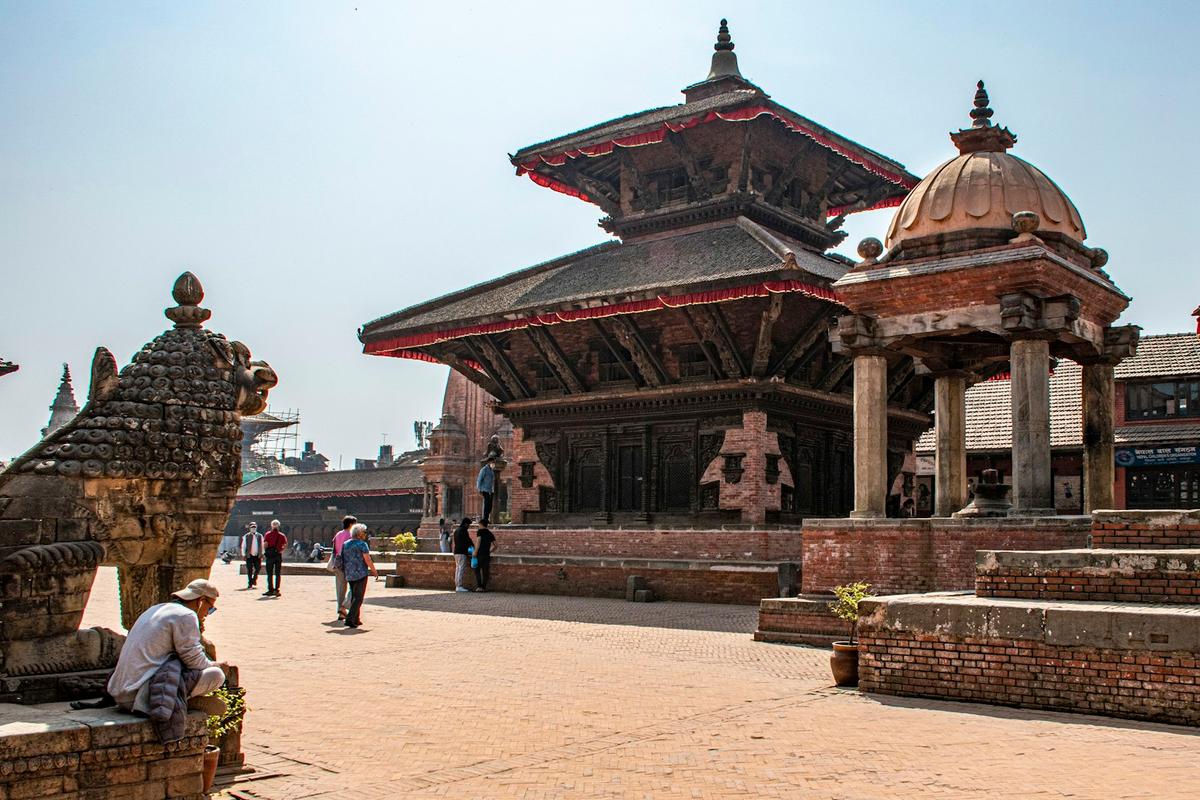
- Pick from the valley rather than ticking it off. UNESCO lists it as seven monument zones; two days covers several at an easy pace.
With only five days, our five-day Nepal plan picks one base instead of two.
How does the highway closure change a one-week trip?
The usual road from the Kathmandu Valley to Pokhara or Chitwan uses the Nagdhunga-Muglin section of the Prithvi Highway, which since 21 November 2026 has closed to all vehicles from 11:00 to 16:00 daily for landslide work at Ghoptebhir. No end date has been announced. Fly at least one Kathmandu leg, and if you drive, leave at first light.
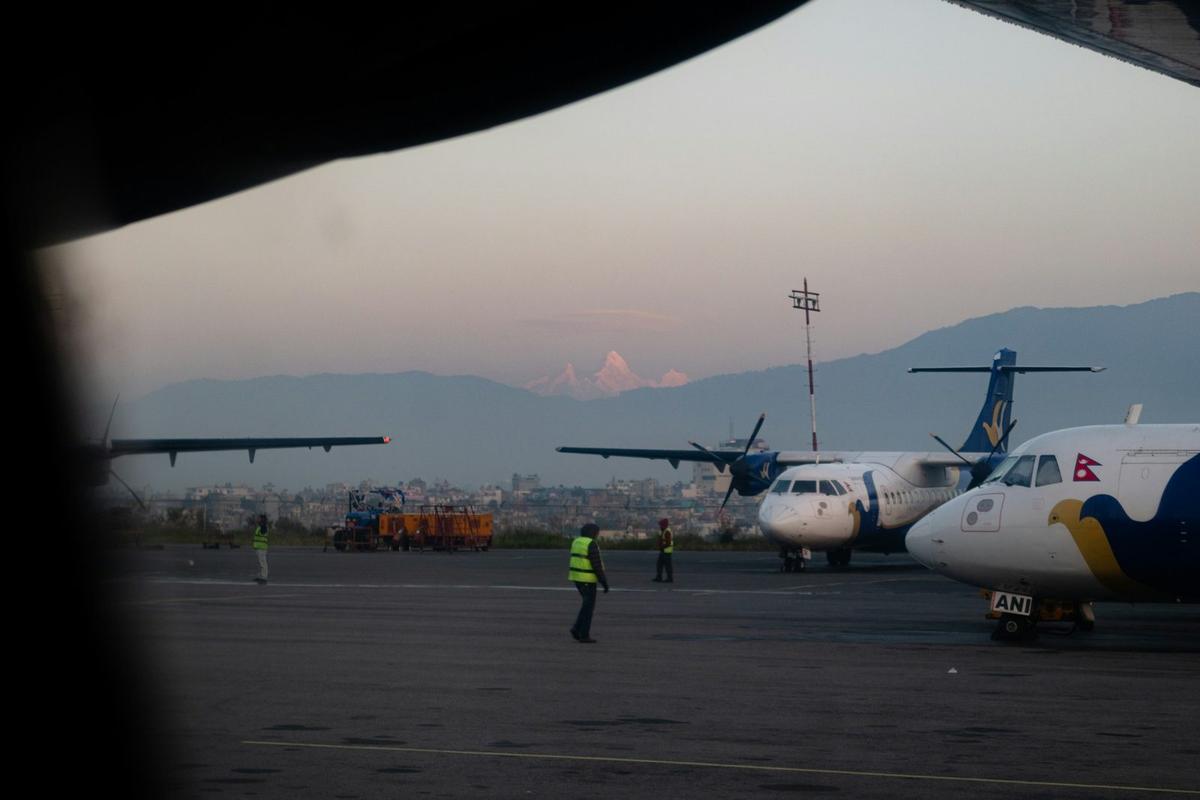
"The Prithvi Highway will remain closed to traffic from 11 am to 4 pm every day until further notice. Road repair and construction work is being carried out in areas including Ghoptebhir."
Anil Thapa, chief of the District Traffic Police Office, Chitwan, quoted by OnlineKhabar, 2026
During the closure, vehicles from Kathmandu are held at Ramailo Danda and those from Pokhara at Aabukhaireni. Outside those hours, traffic has run one way at times past Ghoptebhir (reports to 19 November).
| Leg | Uses the section under repair? | What we suggest |
|---|---|---|
| Kathmandu to Pokhara | Yes | Fly, about 30 minutes, or leave at first light |
| Kathmandu to Sauraha (Chitwan) | Yes | Fly to Bharatpur, about 20 to 25 minutes, or leave at first light |
| Sauraha to Pokhara, or the reverse | No; ask your driver about holds at Aabukhaireni | Drive, usually four to six hours |
| Pokhara or Chitwan back to Kathmandu | Yes | Fly, and never on the day you fly home |
No closure of the Narayangadh to Mugling road has been reported since late September; check on the day. Tourist buses leave Sorhakhutte, near Thamel, at about 7 am; ask how the closure affects arrival times. Our guides to Kathmandu to Pokhara and Kathmandu to Chitwan compare bus, car and flight.
Plan A: Kathmandu, Pokhara and Chitwan in 7 days
Plan A is the classic first-trip loop, in the order that keeps road time short this month: Kathmandu, then Chitwan, then Pokhara, flying into and out of the valley and driving only the middle leg. It suits first-time visitors who want old cities, wildlife and a mountain sunrise in one week.
| Day | Where | What | Night |
|---|---|---|---|
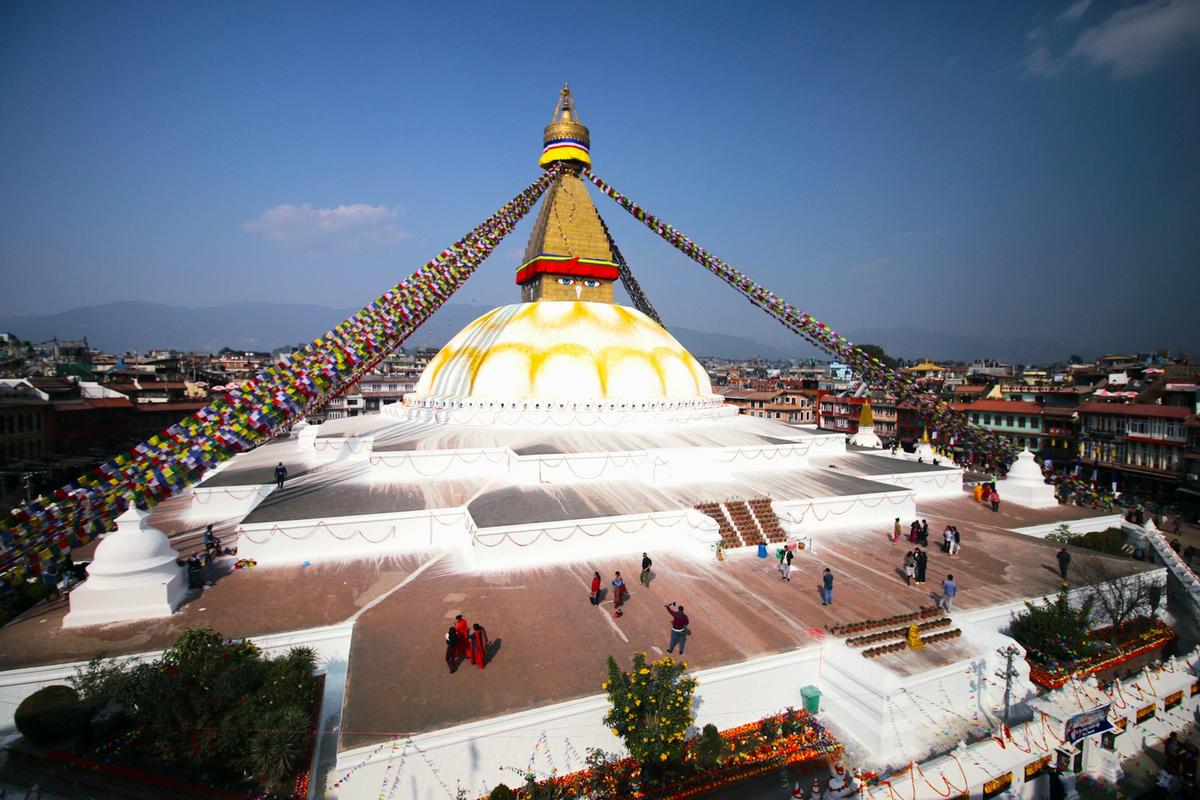
| 1 | Kathmandu | Land and settle in; Boudhanath stupa at dusk if you have the energy | Kathmandu |
| 2 | Kathmandu Valley | Swayambhunath and Kathmandu Durbar Square, Patan after lunch, Pashupatinath for the evening aarti around dusk; check the temple's daily schedule | Kathmandu |
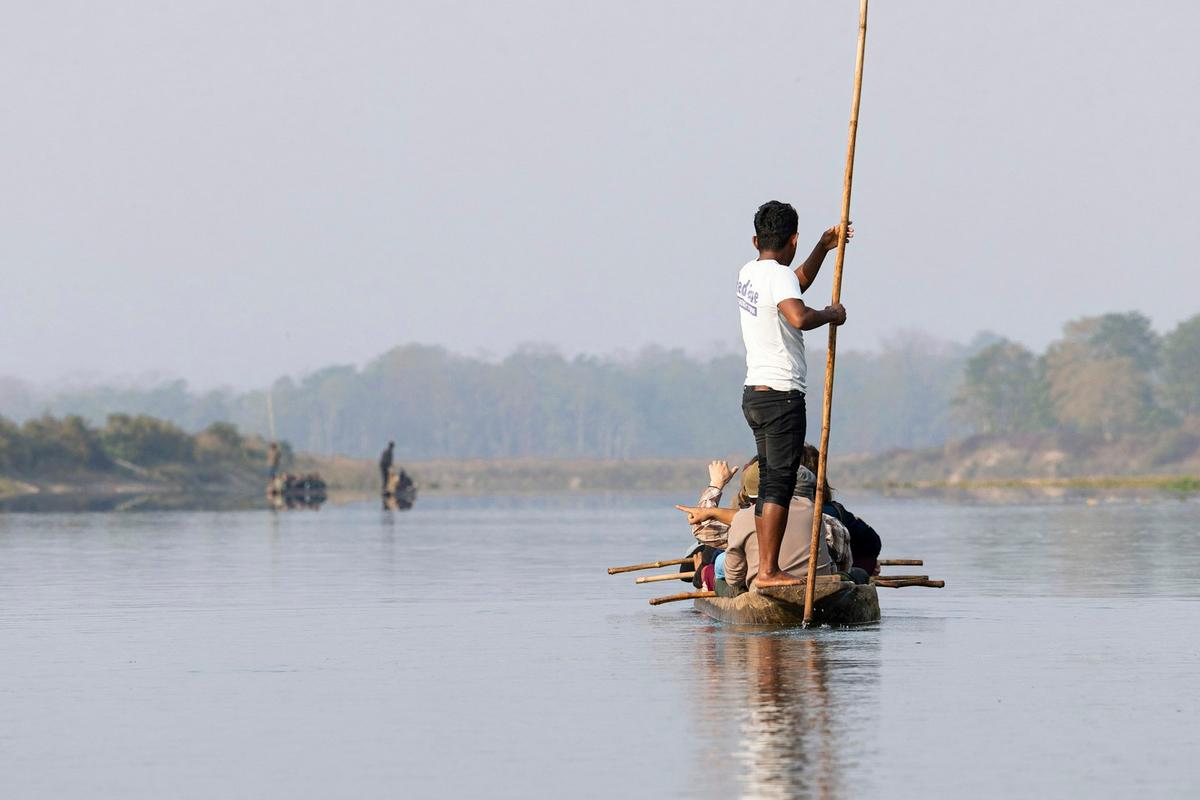
| 3 | Kathmandu to Sauraha | Fly to Bharatpur, about 20 to 25 minutes, then 20 to 45 minutes by road; afternoon by the Rapti River | Sauraha |
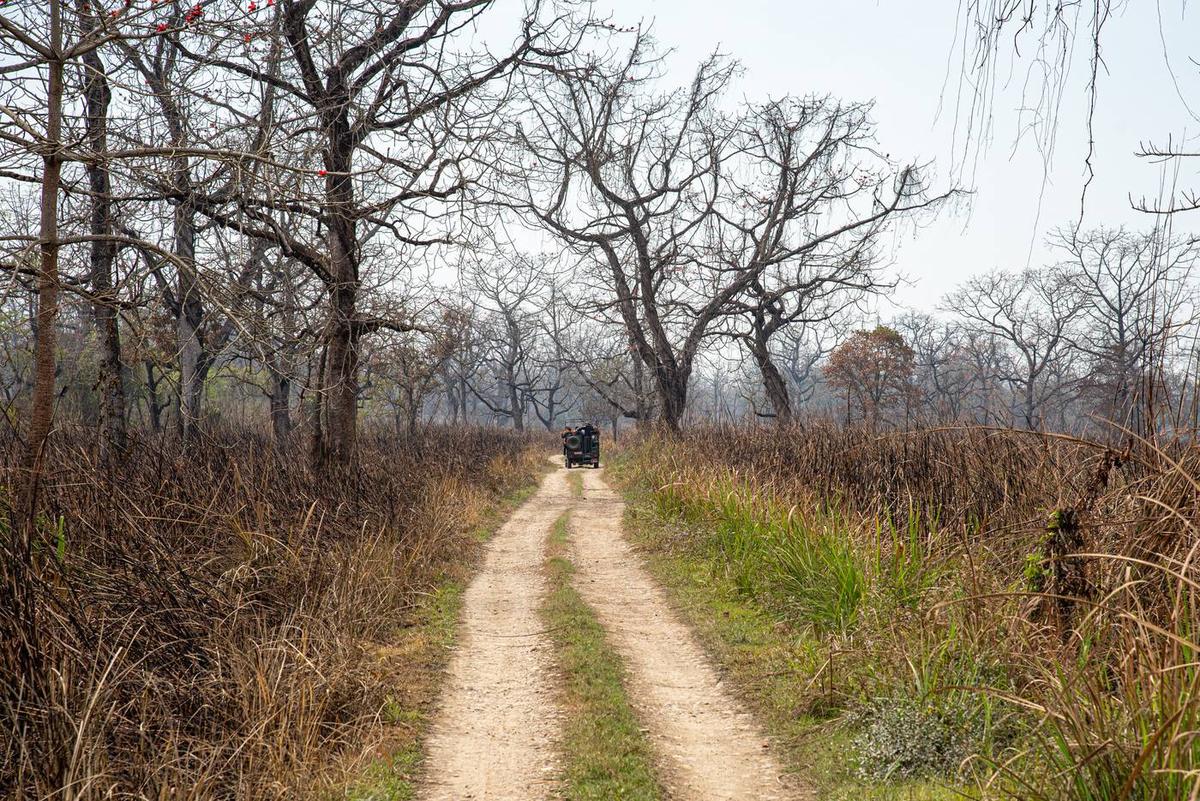
| 4 | Chitwan National Park | Canoe on the Rapti, a jungle walk with a licensed nature guide, a jeep drive; one permit for each day in the park | Sauraha |
| 5 | Sauraha to Pokhara | Drive, usually four to six hours, avoiding the section under repair; evening at Lakeside | Pokhara |
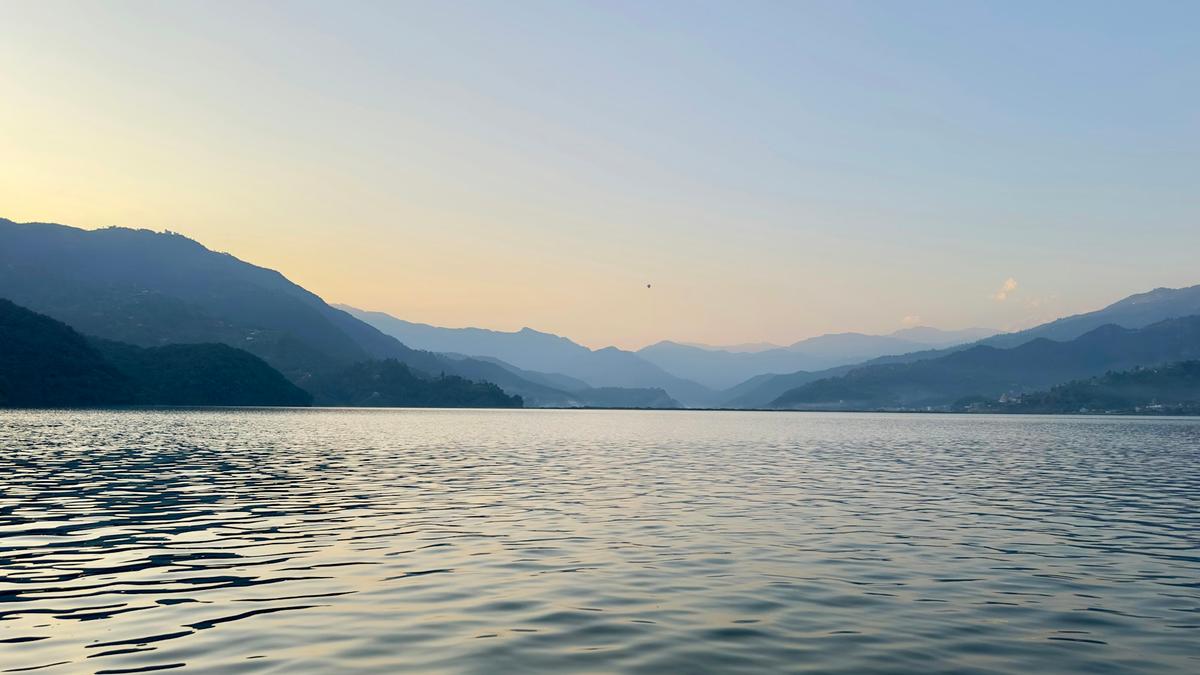
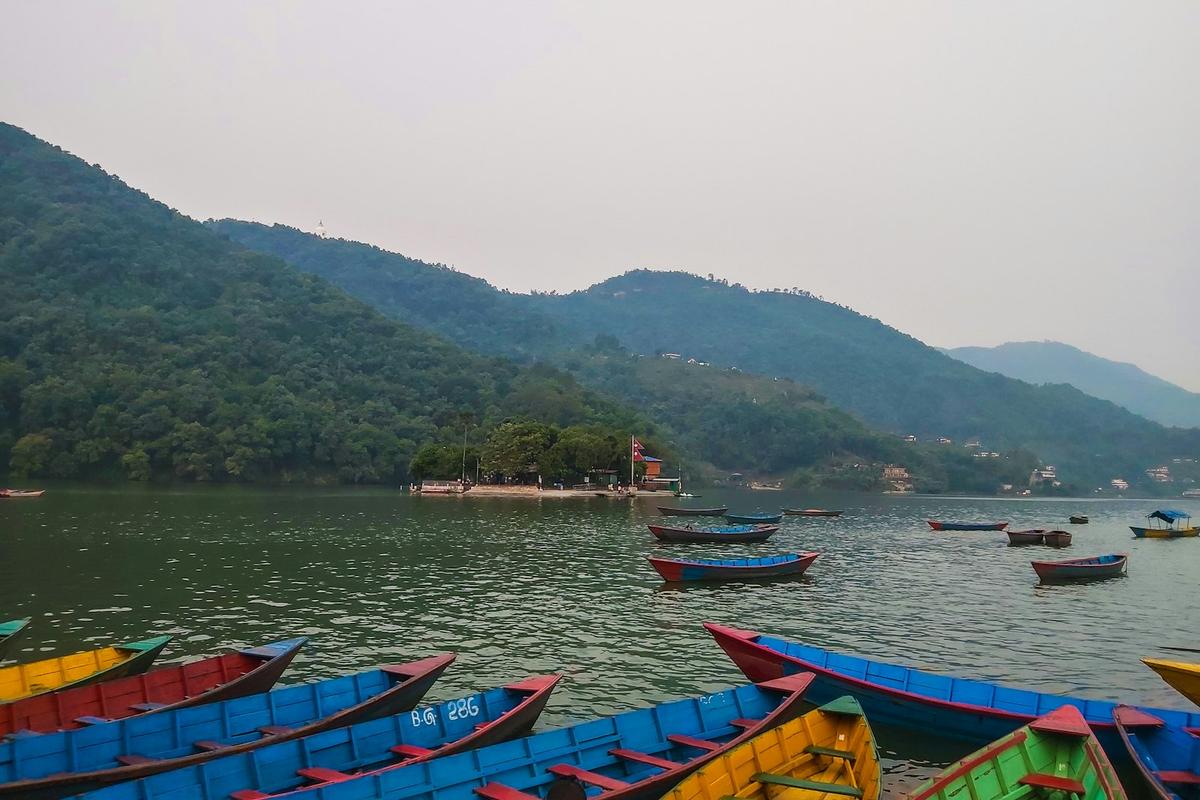
| 6 | Pokhara to Kathmandu | Sarangkot sunrise at 1,595 m, up to about 30 minutes' drive from Lakeside; boat on Phewa Lake; afternoon flight, about 30 minutes | Kathmandu |
| 7 | Kathmandu | Bhaktapur, 12 km east of Kathmandu, if your flight home is late; airport |
At Pashupatinath, the Pashupati Area Development Trust says "Non-Hindu visitors are not permitted inside the main sanctum. Observation from surrounding ghats is permitted." You watch the aarti, the evening fire ceremony, from the riverside steps. Two nights in Sauraha, the village at the park edge, are what make the travel to Chitwan worth it.
"One of the last populations of single-horned Asiatic rhinoceros lives in the park, which is also one of the last refuges of the Bengal tiger."
UNESCO World Heritage Centre, Chitwan National Park listing, 2026
The honest weakness of Plan A is Pokhara: one night covers Sarangkot and the lake, little more, so an eighth day goes there first. To fly only once, drive day 3 from first light, normally five to seven hours and longer while the closure lasts, and keep the day 6 flight.
Plan B: Pokhara first, with the Bharatpur flight
Plan B turns the loop round for people who want two mountain mornings and as little road as possible. You fly to Pokhara, take Buddha Air's daily flight from Pokhara to Bharatpur, about 20 minutes, and fly back to Kathmandu from there. That is three domestic flights instead of two, but no long drive if the flights run.
| Day | Where | What | Night |
|---|---|---|---|
| 1 | Kathmandu | Land and settle in; Garden of Dreams (NPR 400) near Thamel | Kathmandu |
| 2 | Kathmandu Valley | Patan, Boudhanath and Pashupatinath | Kathmandu |
| 3 | Kathmandu to Pokhara | Fly, about 30 minutes; afternoon boat on Phewa Lake | Pokhara |
| 4 | Pokhara | Sarangkot sunrise; Begnas or Rupa lake in the afternoon | Pokhara |
| 5 | Pokhara to Sauraha | Fly to Bharatpur, about 20 minutes, one flight a day, or drive, usually four to six hours; evening by the river | Sauraha |
| 6 | Chitwan to Kathmandu | Morning in the park with a licensed nature guide, one day's permit; fly back from Bharatpur | Kathmandu |
| 7 | Kathmandu | Swayambhunath or Bhaktapur if time allows; airport |
Two Pokhara nights give you two chances at a clear morning; NTB notes that peaks above 6,000 m can be seen unobstructed from 800 m within 28 km.
Treat the Pokhara to Bharatpur flight as something to check: Buddha Air says its departure time is "subject to change". If it is not running, drive; the road avoids the section under repair. Check the Bharatpur to Kathmandu schedule before planning the day 6 park morning, and if wildlife matters more, swap to one Pokhara night and two in Sauraha.
Plan C: one week with a short trek to Ghorepani and Poon Hill
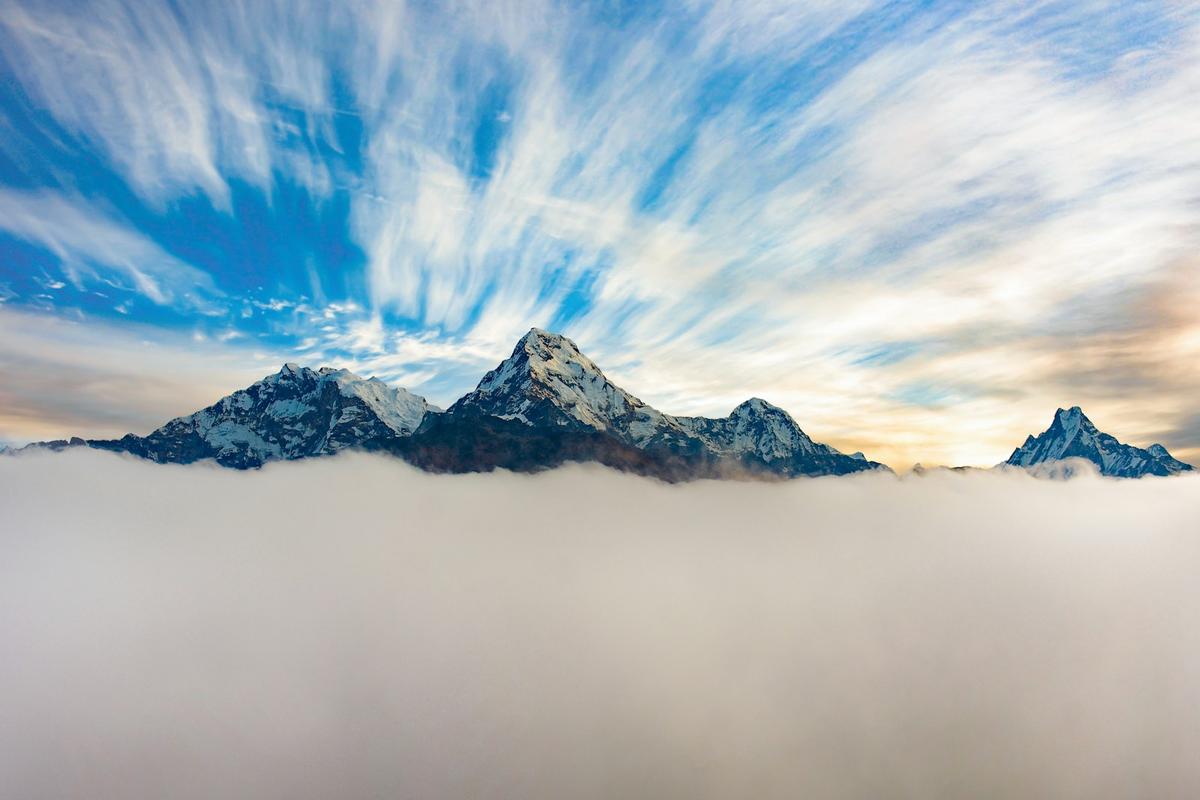
Plan C swaps Chitwan for the mountains: two days in Kathmandu, then a short trek from Pokhara to Poon Hill, at 3,210 m the trek's high point and a viewpoint rather than a peak. NTB calls it "one of the most popular short treks in Nepal, perfect for beginners and families". It suits people happy to walk several hours uphill.
| Day | Where | What | Night |
|---|---|---|---|
| 1 | Kathmandu | Land and settle in | Kathmandu |
| 2 | Kathmandu Valley | Swayambhunath, Kathmandu Durbar Square, Pashupatinath and Boudhanath | Kathmandu |
| 3 | Kathmandu to Pokhara | Fly, about 30 minutes; afternoon at Lakeside | Pokhara |
| 4 | Pokhara to Ghorepani | Jeep to Banthanti, or Ulleri when the upper road is poor, 3 to 4 hours, then 3 to 4 hours on foot to Ghorepani, about 2,850 m | Ghorepani |
| 5 | Poon Hill to Pokhara | Climb to Poon Hill by head torch for sunrise, 30 minutes to an hour; walk down to Banthanti and drive back to Pokhara | Pokhara |
| 6 | Pokhara to Kathmandu | Slow morning by Phewa Lake; fly back, about 30 minutes | Kathmandu |
| 7 | Kathmandu | Patan or Bhaktapur if your flight is late; airport |
The trek is inside the Annapurna Conservation Area: the permit is NPR 3,000 for foreign visitors and NPR 1,000 for SAARC nationals, and costs double if bought at a check-post, so we arrange yours in advance. The Poon Hill viewpoint ticket is NPR 150 for foreigners. A licensed guide walks with you on every trek we run.
With more days, the loop continues to Tadapani, at about 2,600 to 2,700 m, and Ghandruk, at about 2,000 m; our road version takes six days from Kathmandu to Kathmandu, and this month we would fly one of its Kathmandu legs.
Altitude on the trek plan
Day 4 takes you from Pokhara, at 822 m, to Ghorepani at about 2,850 m in one day. The CDC puts the risk of altitude illness at sleeping heights of about 2,450 m or higher for people who are not acclimatised, so take these steps:
- Go up slowly. Above 3,000 m, gain no more than about 500 m of sleeping height a night and rest every three to four days; this trek sleeps lower.
- Walk slowly, "bistarai", and drink water steadily. Skip alcohol at first.
- Know the symptoms: headache, nausea, unusual tiredness and poor sleep. Never go higher with them, and go down if they get worse.
- Ask a doctor before the trip about preventive medicine such as acetazolamide.
Garlic soup is a comforting local tradition, not a proven cure. Pack warm layers: Lumle, the nearest DHM station at 1,738 m, has an average November minimum of 9.3 °C, and Ghorepani is over 1,000 m higher; NTB's rule of thumb is about 6 °C colder for every 1,000 m.
Which plan suits you?
Each Nepal one week itinerary here starts and ends in Kathmandu, so choose by what you came for. Plan A is the best all-rounder for a first visit, Plan B carries the least road, and Plan C gives you the mountains up close at the cost of a long first trekking day.
| Plan A | Plan B | Plan C | |
|---|---|---|---|
| Best for | First visit: heritage, wildlife, one sunrise | Two mountain mornings, least road | Walkers who want the Annapurna views close up |
| Long road legs | One, usually four to six hours | None if the Bharatpur flight runs | Jeep to the trailhead, 3 to 4 hours |
| Domestic flights | Two | Three | Two |
| Highest night | Kathmandu Valley | Kathmandu Valley | Ghorepani, about 2,850 m |
| Permits and tickets | Chitwan, each park day | Chitwan, one park day | ACAP and Poon Hill ticket |
| Skip it if | You dislike early starts | Your flight budget is tight | You have not walked several hours uphill before |
What is the best time for a one-week trip?
October and November are the best months for a week in Nepal: NTB says "the clearest skies are found after the monsoon in October and November". Spring is the other main season. December and January are dry and clear but colder, and morning fog can delay flights, which matters on a plan built around flying.
The monsoon brings 80% of Nepal's rain between June and September. NTB gives Chitwan's best season as October to March, with April to June hot, up to 43 °C.
| Month | Kathmandu (max / min, rain) | Pokhara (max / min, rain) | Bharatpur, Chitwan (max / min) |
|---|---|---|---|
| October | 27.2 / 13.9 °C, 43.3 mm | 27.9 / 17.2 °C, 159.2 mm | 32.0 / 19.8 °C |
| November | 23.6 / 8.4 °C, 6.4 mm | 24.4 / 12.3 °C, 17.2 mm | 28.4 / 13.4 °C |
| December | 20.2 / 4.2 °C, 7.8 mm | 21.0 / 8.3 °C, 11.5 mm | 24.0 / 9.1 °C |
| January | 19.2 / 2.8 °C, 15.2 mm | 19.9 / 7.1 °C, 21.6 mm | 22.1 / 8.1 °C |
| March | 26.0 / 8.8 °C, 38.0 mm | 27.1 / 13.1 °C, 63.7 mm | 31.5 / 13.3 °C |
| April | 28.6 / 12.3 °C, 62.9 mm | 30.0 / 16.1 °C, 141.7 mm | 35.4 / 18.0 °C |
Figures are DHM averages for 1991 to 2020 at Kathmandu airport (1,337 m), Pokhara airport (827 m) and Rampur, Bharatpur (189 m).
In winter, fog cancelled 328 domestic flights in one week of late December 2025, Bharatpur among them, so keep the night-6 buffer without exception. Sunrise also gets later: in Pokhara, 6:42 am on 30 November and 7:00 am on 31 December (timeanddate).
What does a week cost in fees, transport and food?
Official fees for a week are modest: about NPR 5,600 for six main valley sites as a foreign adult, NPR 2,000 for each day in Chitwan, or NPR 3,150 for the ACAP permit and Poon Hill ticket on the trek plan. Transport and hotels decide the rest; none of this is the price of a trip of ours.
| Site or permit | Foreign adult | SAARC |
|---|---|---|
| Kathmandu Durbar Square | NPR 1,000 | NPR 500 |
| Patan Durbar Square and museum | NPR 1,000 | NPR 500 |
| Bhaktapur | NPR 2,000 or USD 15 | NPR 500 |
| Swayambhunath | NPR 200 | NPR 50 |
| Boudhanath | NPR 400 | NPR 100 |
| Pashupatinath | NPR 1,000 per day per entry | NPR 1,000; Indian nationals free |
| Chitwan National Park | NPR 2,000 for each day | NPR 1,000 for each day |
| Sarangkot viewpoint | NPR 50 | Not stated |
| Annapurna Conservation Area | NPR 3,000 | NPR 1,000 |
| Poon Hill viewpoint | NPR 150 | Not stated |
For the six valley sites, Indian nationals pay about NPR 1,650, as Pashupatinath is free for them. Bhaktapur Municipality has charged NPR 2,000 or USD 15 since 17 July 2025; NTB's table still shows an older figure.
Transport only, dated (not packages):
- Tourist bus, Kathmandu to Pokhara: from about NPR 1,300, more for sofa-seat and premium buses (Lonely Planet, November 2025; check when you book).
- Tourist bus, Kathmandu to Sauraha: roughly NPR 800 to 1,500, per our Kathmandu to Chitwan guide (October 2026; check when you book).
- Domestic flights: foreign visitors pay a separate US dollar fare, about US$ 100 one way to Pokhara in March 2025, before fuel costs pushed fares up in 2026 (Kathmandu Post); check the airline.
Food, dated: a plate of momo from NPR 130, dal bhat at a mountain lodge from NPR 400 to 850, and a fancy dinner for two from NPR 3,300 to 6,500 (Lonely Planet, November 2025).
Before you fly: visas and domestic flights
Most visitors get a tourist visa on arrival; it is your own arrangement, not a service we offer. NTB lists multiple-entry fees of US$ 30 for 15 days, US$ 50 for 30 days and US$ 125 for 90 days, so a week needs the 15-day visa. Check the official NTB tourist visa page and its online form before you fly.
- Indian nationals need no visa but must carry accepted ID, such as a passport or an Election Commission of India card; NTB says the Aadhaar card is not accepted.
- Buddha Air asks domestic passengers to arrive one hour before the flight for the security check.
Plan your week with us
We can run any of these plans privately inside Nepal, with a licensed guide, a private vehicle, hotels and the permits each day needs; your visa and international flights stay your own arrangement. Our Nepal itinerary tours page compares every Kathmandu, Pokhara and Chitwan route we run, and these trips sit closest to the plans above:
- Our Golden Triangle Nepal tour covers Kathmandu, Chitwan and Pokhara in six days by road; while the closure lasts, we would swap one Kathmandu leg for a flight.
- Our Chitwan and Pokhara tour by road is a four-day version of the middle of Plan A; add Kathmandu days either side.
- Our Ghorepani Poon Hill trek from Kathmandu is the longer six-day loop behind Plan C.
For other regions, see our guide to places to visit in Nepal. Message us on WhatsApp or use the enquiry form on any trip page with your dates and arrival time, and we will tell you honestly which plan fits your week.
Frequently asked questions
Is 7 days enough for Nepal?
Seven days is enough for a good first trip: the Kathmandu Valley plus Chitwan and Pokhara, or the valley plus a short trek to Poon Hill. It is not enough for a high-mountain trek. We suggest seven to ten days for the three main places, so on a week, fly the Kathmandu legs and sleep in Kathmandu on the last night.
Can you do Kathmandu, Pokhara and Chitwan in one week without rushing?
Yes, if you fly into and out of the Kathmandu Valley and drive only the middle leg between Chitwan and Pokhara, usually four to six hours. Give each place one or two nights. Driving all three legs adds two long road days, and the daily Prithvi Highway closure makes them longer.
Can you add a short trek to a 7-day Nepal trip?
Yes. The easiest is a two-day walk from Pokhara to Ghorepani and Poon Hill, at 3,210 m, in place of Chitwan. You sleep at Ghorepani, about 2,850 m, above the 2,450 m sleeping height at which the CDC says the risk of altitude illness begins, so walk slowly and know the symptoms. We arrange the conservation area permit, and a licensed guide walks with you on every trek we run.
How do you travel between Kathmandu, Pokhara and Chitwan?
By domestic flight or by road. Kathmandu to Pokhara is about 30 minutes by air or most of a day by road; Kathmandu to Bharatpur, for Chitwan, is about 20 to 25 minutes by air. Buddha Air lists one Pokhara to Bharatpur flight a day. While the Prithvi Highway closes 11:00 to 16:00 daily, fly the Kathmandu legs and drive Chitwan to Pokhara.
What is the best time for a one-week trip to Nepal?
October and November are best, with the clearest skies after the monsoon, and spring is the second choice. NTB also says "There is no seasonal constraint on traveling in and through Nepal." December and January are clear but cold, and fog can cancel morning flights, so keep a spare night in Kathmandu. June to September brings most of the year's rain.
How much does a 7-day Nepal trip cost?
It depends on your hotels and how many legs you fly, so we quote from your dates. Official fees are about NPR 5,600 for six valley sites for a foreign adult, NPR 2,000 per day in Chitwan, or NPR 3,150 for the trek permit and Poon Hill ticket. Tourist buses to Pokhara started from about NPR 1,300 in November 2025 (Lonely Planet). See our trip pages for what each includes.
Updated 24 Nov 2026 by our Kathmandu travel team.